
Guide
Find rules, card references, and answers for your next game.
Updated 1 Nov 2026
Cards
General Rules
22 articlesObjectiveGeneral rule
Score the most points before the world ends.
Play traits over rounds called Ages to build a trait pile and score points.
Some Ages are Catastrophes. When the third Catastrophe appears, the world ends and the game is over.
The player with the most points after final scoring wins.
Official Doomlings 2026 rulebook, page 1.
Link to this articleContentsGeneral rule
The base game components used during setup.
The base game contains 113 Trait cards, 40 Age cards, 6 Gene Pool cards, and 1 Birth of Life card.
Traits form the Trait deck. Ages and Catastrophes are combined during setup to form the Age deck.
Official Doomlings 2026 rulebook, page 1.
Link to this articleSet-UpGeneral rule
Prepare Gene Pools, Trait cards, and the three eras of the Age deck.
- Give each player a Gene Pool card set to 5.
- Shuffle the Traits, deal 5 to each player, and place the rest face down as the Trait deck.
- Separate Ages and Catastrophes, then shuffle each pile separately.
- Make three face-down era piles. Put 3 Ages and 1 Catastrophe in each pile, then shuffle each era separately.
- Stack the three era piles to form the Age deck and place Birth of Life on top.
- The player to the dealer's left is the first player.
Official Doomlings 2026 rulebook, page 1–2.
Link to this articleHow to PlayGeneral rule
Flip an Age, take turns clockwise, and continue until the third Catastrophe.
Flip Birth of Life into the first era pile. Beginning with the first player, everyone takes one turn in clockwise order.
After every player has taken a turn, flip the next Age and resolve its effect. A rule printed on an Age lasts for that round only; Gene Pool changes are permanent.
Continue taking turns and revealing Ages until the third Catastrophe is flipped.
Official Doomlings 2026 rulebook, page 3.
Link to this articleTaking a TurnGeneral rule
Play one Trait, resolve its effect, then stabilize your hand.
- Play 1 Trait from your hand into the trait pile in front of you.
- If the Trait has an effect and you are able to play it, resolve it now. Bonus points and World's End effects wait until the end of the game.
- End your turn by drawing or discarding until your hand size matches the number shown at the top of your Gene Pool. This is stabilizing.
Official Doomlings 2026 rulebook, page 3.
Link to this articleCatastrophes & ErasGeneral rule
The first two Catastrophes end eras; the third ends the game.
When the first or second Catastrophe is revealed, move the first-player position one seat to the left and resolve only the white text.
Players take their turns for that Catastrophe round. Reveal the next Age into a new era pile.
When the third Catastrophe is revealed, do not move the first-player position and do not take another round of turns. Proceed to World's End.
Official Doomlings 2026 rulebook, page 3.
Link to this articleWorld's EndGeneral rule
Resolve World's End effects, then the final Catastrophe's gold effect.
When the third Catastrophe is revealed, no more normal turns are taken.
In turn order, resolve World's End effects on Traits in each player's trait pile.
After all World's End effects are complete, every player follows the gold text on the third Catastrophe. Ignore its white text.
Once these effects are resolved, proceed to final scoring.
Official Doomlings 2026 rulebook, page 4.
Link to this articleScoringGeneral rule
Combine the final Catastrophe, face values, and Trait bonuses.
- Add or subtract points from the third Catastrophe's gold effect.
- Add the face values of all Traits in your trait pile.
- Add bonus points from Traits, including Drop of Life bonuses.
The player with the highest final total wins.
Official Doomlings 2026 rulebook, page 4.
Link to this articleTable & Trait-Pile LayoutGeneral rule
Keep shared decks central and organize your Trait pile by color.
Keep the Trait deck, discard pile, Age deck, and each era pile in the shared play area.
Place your Gene Pool beside your trait pile. Group Traits by color and keep Dominant Traits in their own group.
You may overlap Traits of the same color as long as their face values and rules text remain visible.
Official Doomlings 2026 rulebook, page 5.
Link to this articleGene Pool & StabilizingGeneral rule
Your Gene Pool sets the hand size you stabilize to at the end of a turn.
Stabilizing means drawing or discarding until your hand size matches the number at the top of your Gene Pool. It normally happens only at the end of your turn.
When an effect says +1 or -1 Gene Pool, rotate or flip the Gene Pool card to the new value. Do not immediately stabilize unless the effect tells you to.
A Trait's Gene Pool adjustment applies when it enters your trait pile and is reversed when it leaves.
Gene Pools cannot go above 8 or below 1. Ignore a Gene Pool effect that would move beyond those limits.
Official Doomlings 2026 rulebook, page 5.
Link to this articleDominant TraitsGeneral rule
Dominants are protected Traits, with a normal limit of two per player.
Dominant Traits are labelled at the top and show a gold star in the top-right corner.
Once played, a Dominant cannot be swapped, stolen, given, returned, discarded, or otherwise removed from its owner's trait pile.
Each player may normally play no more than 2 Dominants during a game.
Base-game exception: when Birth of a Hero is revealed, a player holding Heroic may play it as a third Dominant.
Official Doomlings 2026 rulebook, page 6.
Link to this articleTrait EffectsGeneral rule
Trait text applies from the appropriate zone and may include requirements or choices.
Text at the bottom of a Trait is its effect. Effectless Traits have no effect text.
Trait effects usually apply while the Trait is in your trait pile. If the Trait leaves, you lose its ongoing effect.
A card swapped or stolen from a hand goes to the new hand. A card swapped, stolen, moved, or given from a trait pile goes to the new trait pile.
A printed Requirement must be satisfied before play unless the effect explicitly says to play without restrictions. When the Requirement applies, a restriction that prevents its required step prevents the play. If a random or immediate play from the Trait deck or discard pile cannot meet its Requirement, put the card into your hand instead of discarding it. If the prevented text is not a requirement, play the Trait and ignore that part.
Text beginning with “you may” is optional.
Official Doomlings 2026 rulebook, page 6, with an administrator-confirmed Requirement clarification (1 November 2026).
Link to this articleTrait IconsGeneral rule
Icons identify Actions, Requirements, Persistent effects, and end-game effects.
Action: Resolves only when the Trait is played directly from your hand. If you can perform it, you must; if you cannot, ignore it. Do not resolve Actions on stolen or swapped Traits unless instructed.
Requirement: Text beginning with “To play, you must…” must be fulfilled to play the Trait unless the effect explicitly says to play without restrictions. If a random or immediate play from the Trait deck or discard pile cannot meet the Requirement, put the card into your hand instead of discarding it. Once played, the Trait can be moved normally unless another rule prevents it.
Persistent: Triggers from a future event and may trigger more than once.
Play When: May be played out of turn when its stated condition occurs. It may also be played normally, although its effect may not apply.
World's End: Resolves only during the third Catastrophe at the end of the game.
Drop of Life: Provides bonus points during final scoring.
Official Doomlings 2026 rulebook, page 7, with an administrator-confirmed Requirement clarification (1 November 2026).
Link to this articleTrait ColorsGeneral rule
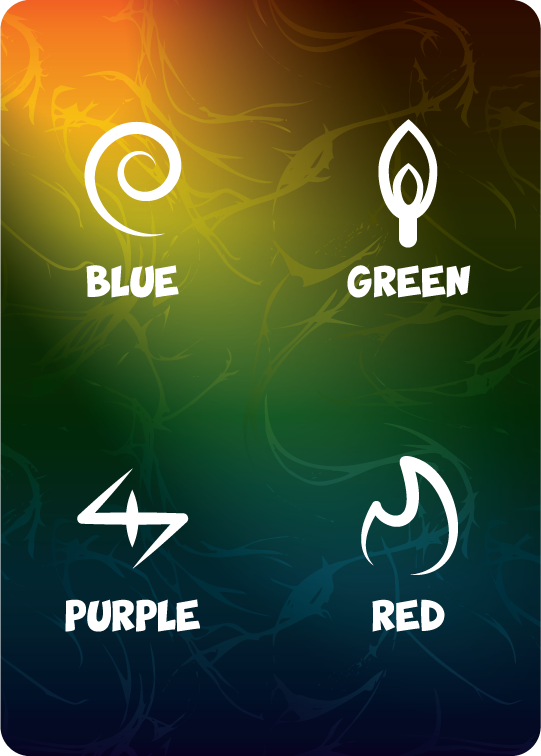
Traits can be blue, green, purple, red, colorless, or multicolored.
The four standard colors are blue, green, purple, and red. A Trait's border identifies its color.
Grey Traits are colorless and do not count for effects that specify a color.
A multicolored Trait counts as every color shown on the card at the same time.
Official Doomlings 2026 rulebook, page 7.
Link to this articleOfficial Rulebook FAQsGeneral rule
Official answers for larger games, empty decks, ties, and rules disputes.
More than 6 players: You may play if you have another way to track the additional Gene Pools, although the decks may run out sooner.
Trait deck runs out: Shuffle the discard pile to make a new Trait deck. If both are empty, players end turns without stabilizing; after the round, skip to the third Catastrophe.
Cannot play a Trait: If your hand is empty, draw 5 and skip the turn. If you hold cards but none are playable, either skip or discard your hand and draw 3. Do not stabilize in either case.
Ties: Casual games may have multiple winners. For a tiebreaker, tied players draw one Trait in turn order; the highest face value wins.
Playing another Trait from an effect: Resolve the second Trait's effect normally.
Rules disputes: Ages take precedence over Traits, and Traits take precedence over the rulebook. Use turn order when deciding which player's effect resolves first.
Shiny card in the box: It is a Mystery Holofoil, a collectible card that may feature unique art, special effects, or a new character.
Official Doomlings 2026 rulebook, page 8.
Link to this articleIntelligent DesignGeneral rule
A 2–4 player drafting variation with individual Trait decks.
Deal 28 Traits to each player and place the remaining Traits in a shared community deck.
Each player keeps 14 and passes 14 left, then keeps 7 of the received cards and passes the remaining 7 left. Add the final 7 received cards to create a 28-card personal deck.
Shuffle personal decks. Players may draw from their own deck or the community deck and discard into their own discard pile.
Official Doomlings 2026 rulebook, page 9.
Link to this articleGenetic MishapGeneral rule
A solo variation featuring a five-card Lab.
Set up normally, then deal 5 Traits face up into a separate Lab area.
After your normal turn and before the next Age, draw 1 Trait. For a regular Trait, discard a card from your hand of the same color, then discard the drawn card.
For a Dominant, move a Trait of the same color from your trait pile into the Lab, then discard the drawn Dominant.
End the game normally. Cards in the Lab do not count toward your final score.
Official Doomlings 2026 rulebook, page 9.
Link to this articleStunted GrowthGeneral rule
A shorter game where nobody takes turns on Catastrophes.
When a Catastrophe is revealed, resolve its effects but do not take player turns for that round.
Reveal the next Age first, then resume normal player turns.
Official Doomlings 2026 rulebook, page 9.
Link to this articleStrategic StartGeneral rule
A light drafting variation for the opening hand.
From the initial 5-card hand, each player keeps 1 card and passes the rest to the right.
Repeat choosing 1 and passing the remainder until every player has a new 5-card starting hand.
Official Doomlings 2026 rulebook, page 9.
Link to this articleProsperous WorldGeneral rule
A longer-game setup for 2–4 players.
Build 3 era piles containing 4 Ages and 1 Catastrophe each, or build 4 era piles containing 3 Ages and 1 Catastrophe each.
Shuffle every era separately before stacking the Age deck.
Official Doomlings 2026 rulebook, page 9.
Link to this articleDon't want to playGeneral rule
What if I don't like any of the cards in my Hand?
If you are able to, you MUST play a trait. Even it it's something you don't want in your trait pile!
- Any Trait that does not have its own restriction or is not restricted from an Age effect can be played.
- You may have to play a Dominant unless you already have 2 in your Traitpile.
- You may have to play an Attachment if you have a suitable Host
Unable to playGeneral rule
What can you do if you can't play a card?
Skip your turn.
- If your hand is empty - draw 5 cards and skip your turn
- If you hold cards but can't play them, you may either keep your cards and skip your turn, or discard your hand and draw 3 cards and skip your turn.
- In either case, do not stabilise this turn!
Frequently Asked Questions
9 articlesCan an Action trait be played if the action cannot be completed?General question
Yes
If you cannot perform an action, you may still play the trait.
Examples
- An action may tell you to give a card to an opponent, but you have an empty hand. You may still play the card and you simply don't give your opponent a card.
How many points are multi-color traits worth?General question
Face value is only counted once - each color is counted towards any end game bonuses you have.
A multi-colored card is simultaneously all colors but it is still only 1 trait.
Examples
- Wild is all 4 colors, with a face value of 4 - by itself is worth 4 points. Wild would give 1 point to Egg Clusters (1 for being blue) and 1 points for Overgrowth (1 for being green) etc.
I can't play any cards in my hand, what can I do?General question
Skip your turn.
If you hold cards but can't play them, you may discard your hand and draw three. If your hand is empty draw 5. Either case skip your turn
Examples
- Only carry attachments without available hosts
- Only have Dominants and don't have any available Dominant Slots
- Age effect restricts playing certain cards that you hold
I don't like my cards, do I have to play?General question
Yes
If you are able, you MUST play a trait, even it's something you don't want in your trait pile.
Examples
- Carry 1 Dominant card that I don't want to play - You must play it if have a free Dominant slot
If I play a trait into an opponents trait pile, who gets the points?General question
The opponent.
Traits give points to the player who's trait pile they're in, positive or negative. Some traits to specifically give or take away points to opponents - These will always specify.
Examples
- Playing Lyonization into an opponent's trait pile will give the opponent 1 point.
- Viral is played into your own trait pile but takes points away from opponents.
If I steal a trait from an opponent's trait pile that has an action, do I get to play that action?General question
No
You only perform the action when the card is played into a trait pile. Actions are not repeating when swapped between trait piles.
Examples
- Vampirism tells you to steal a card and play it, so perform the action
- Tiny Little Melons does not tell you to play it so simply put it in your trait pile without performing the action
Told to draw a card and play it but I can't, where does it go?General question
Put it in your hand.
If a trait or age effect tells you to draw a card and play it immediately, you must still observe any restrictions, unless stated to ignore them.
Examples
- Drew a blue card but the age effect prevents playing blue cards this round.
What order do players complete World's End effects?General question
Player resolve their effects in turn order, they may however complete their World's End effects in order of their choosing.
Players in turn order. Traits in any order.
Examples
- A player with two traits telling them to stabilise at World's End to different amounts, this play would stabilise once for either card, then again for the second time in any order.
When Stealing or Swapping traits with/from another player, where does it go?General question
Hand to Hand & Trait pile to Trait pile
Goes wherever it came from. If you steal from an opponents hand, the card goes to your hand, if you steal from a trait pile, it goes straight into your trait pile.
Examples
- Traits may say steal a trait and play it - You would then steal a trait from an opponents hand and observing normal playing rules, performing actions, respecting requirements etc.
Videos
12 articlesDeeplingsVideo
Watch this Deeplings video from the app’s Guide.
Watch on YouTubeIf the player is unavailable, watch on YouTube.
DinolingsVideo
Watch this Dinolings video from the app’s Guide.
Watch on YouTubeIf the player is unavailable, watch on YouTube.
Fuzelings · Video 1Video
Watch this Fuzelings video from the app’s Guide.
Watch on YouTubeIf the player is unavailable, watch on YouTube.
Fuzelings · Video 2Video
Watch this Fuzelings video from the app’s Guide.
Watch on YouTubeIf the player is unavailable, watch on YouTube.
GlitterlingsVideo
Watch this Glitterlings video from the app’s Guide.
Watch on YouTubeIf the player is unavailable, watch on YouTube.
Magical MerchantsVideo
Watch this Magical Merchants video from the app’s Guide.
Watch on YouTubeIf the player is unavailable, watch on YouTube.
MoonlingsVideo
Watch this Moonlings video from the app’s Guide.
Watch on YouTubeIf the player is unavailable, watch on YouTube.
MythlingsVideo
Watch this Mythlings video from the app’s Guide.
Watch on YouTubeIf the player is unavailable, watch on YouTube.
TechlingsVideo
Watch this Techlings video from the app’s Guide.
Watch on YouTubeIf the player is unavailable, watch on YouTube.
TreasuresVideo
Watch this Treasures video from the app’s Guide.
Watch on YouTubeIf the player is unavailable, watch on YouTube.
How To Play Doomlings · Video 1Video
Watch this How To Play Doomlings video from the app’s Guide.
Watch on YouTubeIf the player is unavailable, watch on YouTube.
How To Play Doomlings · Video 2Video
Watch this How To Play Doomlings video from the app’s Guide.
Watch on YouTubeIf the player is unavailable, watch on YouTube.
Card Types
8 articlesTraitsCard reference
690 cards across 1855 public prints. Explore their artwork, effects, values, and print variants in the Compendium.
Cards
Open this section to load cards.
AgesCard reference
101 cards across 233 public prints. Explore their artwork, effects, values, and print variants in the Compendium.
Cards
Open this section to load cards.
CatastrophesCard reference
45 cards across 116 public prints. Explore their artwork, effects, values, and print variants in the Compendium.
Cards
Open this section to load cards.
SignsCard reference
50 cards across 72 public prints. Explore their artwork, effects, values, and print variants in the Compendium.
Cards
Open this section to load cards.
MerchantsCard reference
4 cards across 23 public prints. Explore their artwork, effects, values, and print variants in the Compendium.
Cards
Open this section to load cards.
TrinketsCard reference
40 cards across 84 public prints. Explore their artwork, effects, values, and print variants in the Compendium.
Cards
Open this section to load cards.
TreasuresCard reference
28 cards across 31 public prints. Explore their artwork, effects, values, and print variants in the Compendium.
Cards
Open this section to load cards.
LoreCard reference
4 cards across 7 public prints. Explore their artwork, effects, values, and print variants in the Compendium.
Cards
Open this section to load cards.
Card FAQs
28 articlesTransgenic Modification · Can Cybernetic or Transgenic Modification change a colourless trait into a coloured trait?Published card FAQ
Applies to: This card version. 2 visible prints.
Yes. A colourless Trait can be changed into a coloured Trait by Cybernetic, Transgenic Modification, or any other effect that explicitly changes the card's colour. Cybernetic makes an eligible host blue, and Transgenic Modification makes an eligible host green. Merely attaching a card without explicit colour-changing text does not change its colour.
Colourless means the Trait currently has no colour; it does not make the Trait immune to colour-changing effects. Cybernetic can attach to a colourless Trait because it is non-blue, then “Host trait is now blue.” Transgenic Modification can attach because the colourless Trait is non-green, then “Host trait is now green.” Apply the same principle whenever another effect explicitly gives or changes a card's colour.
View matching prints (2)
Source on Discord (may require sign-in)
Link to this articleVenomous · Tome of Hidden Knowledge currently prevents me from playing red. If Venomous is my third purple trait, may I pocket the Tome and then use Venomous to play a red trait?Published card FAQ
Applies to: This card version. 1 visible print.
Yes. As soon as Venomous is played as your third purple Trait, Tome of Hidden Knowledge's Pocket Objective is complete and the Tome is pocketed before Venomous's Action continues. Its “Cannot play red” Awesome Power then stops, so Venomous may play a red Trait as its additional Trait.
Tome of Hidden Knowledge is face up and restricts you from playing red only while its Awesome Power is active. Playing purple Venomous gives you three purple Traits and immediately satisfies “Trait pile: 3 purples.” Pocket the Tome at that point. The Tome is no longer active when Venomous resolves “Play another trait,” so a red Trait is legal.
View matching prints (1)
Source on Discord (may require sign-in)
Link to this articleGelatinous · Gelatinous says I may steal two cards. Can I choose to steal only one, and what if the opponent has only one card?Published card FAQ
Applies to: This card version. 1 visible print.
Yes. You may decline Gelatinous's optional steal entirely. If you use it and the opponent has at least two cards, you must steal exactly two—you cannot voluntarily steal only one. If the opponent has only one card, you may steal that one card instead.
“You may” makes the whole steal optional; it does not change “steal 2” into “steal up to 2.” When two or more cards are available, resolve the chosen effect by stealing two. When only one card is available, steal that available card or decline the optional effect. Staff acknowledged that the older wording is ambiguous, so a group may consistently use “up to two” as a house rule, but that is not the default ruling.
View matching prints (1)
Source on Discord (may require sign-in)
Link to this articleTome Of Hidden Knowledge · Tome of Hidden Knowledge currently prevents me from playing red. If Venomous is my third purple trait, may I pocket the Tome and then use Venomous to play a red trait?Published card FAQ
Applies to: This card version. 2 visible prints.
Yes. As soon as Venomous is played as your third purple Trait, Tome of Hidden Knowledge's Pocket Objective is complete and the Tome is pocketed before Venomous's Action continues. Its “Cannot play red” Awesome Power then stops, so Venomous may play a red Trait as its additional Trait.
Tome of Hidden Knowledge is face up and restricts you from playing red only while its Awesome Power is active. Playing purple Venomous gives you three purple Traits and immediately satisfies “Trait pile: 3 purples.” Pocket the Tome at that point. The Tome is no longer active when Venomous resolves “Play another trait,” so a red Trait is legal.
View matching prints (2)
Source on Discord (may require sign-in)
Link to this articleVampirism · Is vampirism’s ability an action?Published card FAQ
Applies to: This card version. 4 visible prints.
No. Vampirism is a Dominant and does not have an Action. Its effect steals a Trait and instructs you to play that stolen Trait's Action if it has one. The Action belongs to the stolen Trait, not Vampirism. Action-blocking cards cannot block Vampirism's effect, and cards that replay Actions cannot repeat Vampirism's effect.
Both Vampirism wordings instruct you to steal a Trait and play its Action. The pronoun its and the Action symbol refer to the stolen Trait's Action, not to Vampirism's effect. Do not call Vampirism's steal-and-follow-up ability an Action. Keep the two effects separate: the stolen Trait's Action remains an Action, and any blocking or replay instruction must be assessed against that Action and its own eligibility. Vampirism's Dominant status does not confer immunity on the stolen Trait's Action.
View matching prints (4)
- Print 1 · Vampirism · Standard · Classic Game, Deluxe Bundle, Classic Game (Kickstarter), Black Box (Kickstarter), Gold Box (Kickstarter)
- Print 2 · Vampirism · Holographic · Classic Game, Deluxe Bundle, Classic Game (Kickstarter), Black Box (Kickstarter), Gold Box (Kickstarter)
- Print 3 · Vampirism · Holographic · Classic Game, Deluxe Bundle, Classic Game (Kickstarter), Black Box (Kickstarter), Gold Box (Kickstarter)
- Print 4 · Vampirism · Holographic · Classic Game, Deluxe Bundle, Classic Game (Kickstarter), Black Box (Kickstarter), Gold Box (Kickstarter)
Fading Away · If Poisonous is played during Fading Away, where is it suppressed after its swap?Published card FAQ
Applies to: This card version. 3 visible prints.
Poisonous is only suppressed here because another effect, such as Fading Away, instructed the player to suppress the played Trait after resolving its Action. Complete Poisonous's swap first. Then return Poisonous and suppress it face down under an eligible non-Dominant Trait in the trait pile of the player who played Poisonous—not under a Trait in the opponent's pile.
The pending words “suppress it” continue to identify the same physical card after that card moves. With Poisonous, resolve the entire swap so Poisonous enters the opponent's trait pile. Then bring Poisonous back to the player who played it and place it face down beneath an eligible Trait in that player's own trait pile. This is the same location rule already confirmed directly by Jess for Venomous; Poisonous does not normally suppress itself when played without a separate suppression instruction.
View matching prints (3)
Venomous · Tome of Hidden Knowledge currently prevents me from playing red. If Venomous is my third purple trait, may I pocket the Tome and then use Venomous to play a red trait?Published card FAQ
Applies to: This card version. 3 visible prints.
Yes. As soon as Venomous is played as your third purple Trait, Tome of Hidden Knowledge's Pocket Objective is complete and the Tome is pocketed before Venomous's Action continues. Its “Cannot play red” Awesome Power then stops, so Venomous may play a red Trait as its additional Trait.
Tome of Hidden Knowledge is face up and restricts you from playing red only while its Awesome Power is active. Playing purple Venomous gives you three purple Traits and immediately satisfies “Trait pile: 3 purples.” Pocket the Tome at that point. The Tome is no longer active when Venomous resolves “Play another trait,” so a red Trait is legal.
View matching prints (3)
Source on Discord (may require sign-in)
Link to this articleEndurance · Can Endurance be repeatedly discarded to satisfy one effect, and can a different effect discard it later in the turn?Published card FAQ
Applies to: This card version. 1 visible print.
No. Endurance can count only once toward a single effect during a turn, whether that effect requires multiple discarded cards or a total discarded face value. After Endurance returns to your trait pile, a different effect in the same turn may discard it again and count it once for that different effect.
Endurance returns to the trait pile when discarded from there. Its return does not let the same effect count that one card repeatedly as multiple discarded cards or repeatedly add its face value toward a single required total. Each different effect has its own opportunity to discard and count Endurance once.
View matching prints (1)
Wanderlust · When may Automimicry stop Wanderlust, and what happens if Wanderlust has already partially resolved?Published card FAQ
Applies to: This card version. 2 visible prints.
A blocking card such as Automimicry must be played at the start of an Action, not after part of that Action has resolved. Once Wanderlust has begun resolving and cards have been drawn, Wanderlust cannot be stopped retroactively. If Wanderlust causes a second card with an Action to be played, that second card starts a separate Action that may be stopped at its own start.
Wanderlust's printed instructions form one Action: draw a card, choose whether to play it or draw from the bottom, and optionally play the selected card. Opponents must receive a brief reasonable opportunity to respond when Wanderlust is announced, but they cannot wait to see the drawn cards and then cancel Wanderlust. No rollback is needed because a valid block occurs before the Action resolves. A card played by Wanderlust is a new play; if that card has an Action, announce that Action and provide a new response window before resolving it.
View matching prints (2)
Source on Discord (may require sign-in)
Link to this articleExposed · Exposed says to steal one card from an opponent's hand. Is the card random, chosen by that opponent, or may I look at their hand and choose one?Published card FAQ
Applies to: This print. 1 visible print.
Look at the chosen opponent's hand and choose the card to take. The stolen card is not selected at random, and the opponent does not choose it.
The current Exposed print says: “Steal 1 card from an opponent's hand. Then give them 2 cards from your hand.” Although the printed text does not state how the stolen card is selected, the official ruling allows the player resolving Exposed to inspect the chosen opponent's hand and choose one card to steal. After taking that card, continue the printed Action by giving that opponent 2 cards from your hand.
View matching prints (1)
Skimmer · Can Skimmer repeat Glass Predator's action when Glass Predator is already in a trait pile?Published card FAQ
Applies to: This card version. 2 visible prints.
No. Skimmer can replay an eligible Action from a trait pile, but replaying an Action does not play the Trait. Glass Predator says “When you play Glass Predator,” so that condition is not met while Glass Predator is already in a trait pile. Its steal-1-then-play-1 Action cannot be replayed through Skimmer.
Glass Predator reads: “When you play Glass Predator, steal 1 from an opponent’s trait pile. Then play 1.” Skimmer reads: “Once per turn, after you play an effectless trait, you may replay 1 action (A) from your trait pile.” Skimmer supplies permission to resolve an eligible Action again, but it does not treat the selected Trait as newly played. Glass Predator’s own play condition therefore remains unsatisfied. This is a specific restriction on Glass Predator; it does not prevent Skimmer from replaying other Actions whose own wording permits them to resolve from the trait pile.
View matching prints (2)
Bony Plates · If another player resolves Bony Plates' Action from my trait pile, can they discard my Bony Plates?Published card FAQ
Applies to: This print. 1 visible print.
Yes. For the Bony Plates print that reads “Draw 3 cards…”, Player 1 resolves its Action. Player 1 draws 3 cards. If Player 1 uses the optional play, Player 1 discards that Bony Plates directly from Player 2’s trait pile, plays 1 of the 3 drawn cards, and discards the other drawn cards. Player 2 does not make the choice or perform the discard.
Inventive lets Player 1 resolve an Action from an opponent’s trait pile; it does not transfer the selected Trait to Player 1. While resolving Bony Plates, “you” means Player 1, because Player 1 is resolving the Action. The named instruction “discard Bony Plates” means the physical Bony Plates whose Action was selected, so Player 1 may discard that copy from Player 2’s trait pile to use the optional play. The discard is what enables Player 1 to play one of the cards drawn by this effect.
View matching prints (1)
Fey · When Fey is suppressed, does its +1 Gene Pool effect stop applying?Published card FAQ
Applies to: This card version. 1 visible print.
Yes. When a card is suppressed, its Gene Pool modifier has no effect. Fey's “All players receive: +1 Gene Pool” effect is therefore inactive while Fey is suppressed.
Suppression turns off the suppressed card's effect. This applies to any positive or negative Gene Pool modifier printed as that card's effect. The modifier does not change the Gene Pool while the card remains suppressed; if suppression ends and the card is still in play, its effect becomes active again.
View matching prints (1)
Snap-Trap · Can I use Snap-Trap's Play Anytime ability whenever I want, even when its stated condition is not met?Published card FAQ
Applies to: This card version. 2 visible prints.
Normally, a Play When or Play Anytime Trait may still be played as your normal Trait play on your turn, provided its exact text does not forbid that play and every Play Requirement and normal restriction is satisfied. Its special condition is required only to use the special timing and any benefit linked to that condition. When it is played normally, resolve each other instruction according to its wording: a linked conditional benefit does not happen without its condition, while an independent Action, effect, or persistent modifier applies normally unless the card says otherwise.
Separate three questions. First, can the card be played normally? Usually yes, but text such as “Cannot be played on your turn,” “Cannot be played from your hand,” a Play Requirement, the Dominant limit, or another restriction still controls. Second, can the card use its special Play When or Play Anytime timing? Only when the stated event, reveal, cost, target, or other condition is satisfied. Third, which effects resolve? Read the exact print. Text that depends on the special event—such as “Steal 1 of those traits”—does not resolve during an ordinary play when there are no qualifying “those traits.” A separate persistent modifier—such as Motion Dazzle's “+1 Gene Pool”—applies while the card is in the relevant trait pile regardless of whether it entered through normal play or its Play When timing.
View matching prints (2)
Source on Discord (may require sign-in)
Link to this articleDimming Hat · Is Dimming Hat prevention mandatory or optional?Published card FAQ
Applies to: This card version. 2 visible prints.
While Dimming Hat's Awesome Power is active, it automatically prevents Actions that you play. This prevention is mandatory: you cannot choose to let those Actions resolve.
The printed instruction is “Prevent actions (a) that you play.” It is a required effect, not permission to decide whether to cancel an Action. Explain it as automatically preventing your Actions while the Awesome Power is active. The phrase “you can prevent” incorrectly introduces a choice.
View matching prints (2)
Someone's Trash · If Someone's Trash draws two more Rush treasures, may I play those newly drawn Rushes before my turn starts?Published card FAQ
Applies to: This card version. 1 visible print.
Yes. You may play any number of Treasures during your turn, subject to each Treasure's timing. If Someone's Trash draws new Rush Treasures while you are still in the pre-turn Rush window, you may play those newly drawn Rushes in that same window.
There is no one-Treasure-per-turn limit. Resolve one selected effect from Someone's Trash, then add the two drawn Treasures to the Treasures available to you. Any of those drawn Treasures with the Rush glyph may be played before the turn starts, including another Someone's Trash that draws still more Rush Treasures. A Treasure without Rush must wait for the timing shown by its own glyph.
View matching prints (1)
Source on Discord (may require sign-in)
Link to this articleSkybound · When Skybound says it can be sent flying from my hand, does doing that count as playing the card?Published card FAQ
Applies to: This print. 1 visible print.
Yes. Sending Skybound flying from your hand is classed as playing Skybound. It follows Play Anytime timing and, functionally, behaves like a Play When card.
Skybound reads: “At any time: Reveal 2 blues to send Skybound flying from hand to an opponent's trait pile.” The words “send flying” describe how and where the card enters play; they do not turn the instruction into a non-play move. Reveal the required 2 blue cards, then play Skybound directly from your hand into an opponent's trait pile. Because this is a play, rules and effects that refer to a card being played or prevent a card from being played apply. Skybound does not enter your own trait pile first, and this clarification does not make ordinary stealing, swapping, or moving count as playing.
View matching prints (1)
Source on Discord (may require sign-in)
Link to this articleOpposable Thumbs · Can Opposable Thumbs be played out of turn, and when does it copy the other Dominant?Published card FAQ
Applies to: This card version. 2 visible prints.
No. Opposable Thumbs cannot be played out of turn. Play it as your normal Trait play while you already have another Dominant in your trait pile. Only after Opposable Thumbs enters the trait pile does it become an exact copy of that other Dominant.
The question-mark wings do not grant Play When or Play Anytime timing. They identify the card's play requirement: another Dominant must already be in your trait pile. Opposable Thumbs is still itself until it has legally entered the trait pile, so it cannot use the copied Dominant's text, timing permission, restrictions, or identity to make its own play legal. Once it is in the trait pile, apply its instruction to copy the other Dominant now and for the rest of the game.
View matching prints (2)
Glass Predator · Can Skimmer repeat Glass Predator's action when Glass Predator is already in a trait pile?Published card FAQ
Applies to: This card version. 2 visible prints.
No. Skimmer can replay an eligible Action from a trait pile, but replaying an Action does not play the Trait. Glass Predator says “When you play Glass Predator,” so that condition is not met while Glass Predator is already in a trait pile. Its steal-1-then-play-1 Action cannot be replayed through Skimmer.
Glass Predator reads: “When you play Glass Predator, steal 1 from an opponent’s trait pile. Then play 1.” Skimmer reads: “Once per turn, after you play an effectless trait, you may replay 1 action (A) from your trait pile.” Skimmer supplies permission to resolve an eligible Action again, but it does not treat the selected Trait as newly played. Glass Predator’s own play condition therefore remains unsatisfied. This is a specific restriction on Glass Predator; it does not prevent Skimmer from replaying other Actions whose own wording permits them to resolve from the trait pile.
View matching prints (2)
Endurance · Can Endurance be repeatedly discarded to satisfy one effect, and can a different effect discard it later in the turn?Published card FAQ
Applies to: This card version. 2 visible prints.
No. Endurance can count only once toward a single effect during a turn, whether that effect requires multiple discarded cards or a total discarded face value. After Endurance returns to your trait pile, a different effect in the same turn may discard it again and count it once for that different effect.
Endurance returns to the trait pile when discarded from there. Its return does not let the same effect count that one card repeatedly as multiple discarded cards or repeatedly add its face value toward a single required total. Each different effect has its own opportunity to discard and count Endurance once.
View matching prints (2)
Vampirism · Is vampirism’s ability an action?Published card FAQ
Applies to: This card version. 6 visible prints.
No. Vampirism is a Dominant and does not have an Action. Its effect steals a Trait and instructs you to play that stolen Trait's Action if it has one. The Action belongs to the stolen Trait, not Vampirism. Action-blocking cards cannot block Vampirism's effect, and cards that replay Actions cannot repeat Vampirism's effect.
Both Vampirism wordings instruct you to steal a Trait and play its Action. The pronoun its and the Action symbol refer to the stolen Trait's Action, not to Vampirism's effect. Do not call Vampirism's steal-and-follow-up ability an Action. Keep the two effects separate: the stolen Trait's Action remains an Action, and any blocking or replay instruction must be assessed against that Action and its own eligibility. Vampirism's Dominant status does not confer immunity on the stolen Trait's Action.
View matching prints (6)
- Print 1 · Vampirism · Standard · Base Game: 3rd Edition
- Print 2 · Vampirism · Holographic · Base Game: 3rd Edition
- Print 3 · Vampirism · Alternate · Holographic · Base Game: 3rd Edition
- Print 4 · Vampirism · Alternate · Holographic · Base Game: 3rd Edition
- Print 5 · Vampirism · Holographic · Rainbow · Base Game: 3rd Edition
- Print 6 · Vampirism · Holographic · Toy · Base Game: 3rd Edition
Poisonous · If Poisonous is played during Fading Away, where is it suppressed after its swap?Published card FAQ
Applies to: This card version. 3 visible prints.
Poisonous is only suppressed here because another effect, such as Fading Away, instructed the player to suppress the played Trait after resolving its Action. Complete Poisonous's swap first. Then return Poisonous and suppress it face down under an eligible non-Dominant Trait in the trait pile of the player who played Poisonous—not under a Trait in the opponent's pile.
The pending words “suppress it” continue to identify the same physical card after that card moves. With Poisonous, resolve the entire swap so Poisonous enters the opponent's trait pile. Then bring Poisonous back to the player who played it and place it face down beneath an eligible Trait in that player's own trait pile. This is the same location rule already confirmed directly by Jess for Venomous; Poisonous does not normally suppress itself when played without a separate suppression instruction.
View matching prints (3)
Cybernetic · Can Cybernetic or Transgenic Modification change a colourless trait into a coloured trait?Published card FAQ
Applies to: This card version. 1 visible print.
Yes. A colourless Trait can be changed into a coloured Trait by Cybernetic, Transgenic Modification, or any other effect that explicitly changes the card's colour. Cybernetic makes an eligible host blue, and Transgenic Modification makes an eligible host green. Merely attaching a card without explicit colour-changing text does not change its colour.
Colourless means the Trait currently has no colour; it does not make the Trait immune to colour-changing effects. Cybernetic can attach to a colourless Trait because it is non-blue, then “Host trait is now blue.” Transgenic Modification can attach because the colourless Trait is non-green, then “Host trait is now green.” Apply the same principle whenever another effect explicitly gives or changes a card's colour.
View matching prints (1)
Source on Discord (may require sign-in)
Link to this articleHidden · I have Tome of Hidden Knowledge and two purple traits. If Hidden steals a third purple trait and then suppresses it, may I pocket the Tome during the brief moment when the stolen trait is in my trait pile?Published card FAQ
Applies to: This card version. 3 visible prints.
Yes. Hidden first steals the third purple Trait into your trait pile, immediately completing Tome of Hidden Knowledge's Pocket Objective. You may pocket the Tome during that moment before Hidden's later “Then suppress it” instruction resolves.
Hidden resolves in its printed order: first steal 1 Trait from an opponent's trait pile, then suppress that stolen Trait. The stolen purple Trait is in your trait pile after the steal, so “Trait pile: 3 purples” is satisfied before suppression. Pocket objectives have an open timing window, allowing you to pocket the face-up Tome at that point even though Hidden will suppress the stolen Trait next.
View matching prints (3)
Source on Discord (may require sign-in)
Link to this articleTome Of Hidden Knowledge · I have Tome of Hidden Knowledge and two purple traits. If Hidden steals a third purple trait and then suppresses it, may I pocket the Tome during the brief moment when the stolen trait is in my trait pile?Published card FAQ
Applies to: This card version. 2 visible prints.
Yes. Hidden first steals the third purple Trait into your trait pile, immediately completing Tome of Hidden Knowledge's Pocket Objective. You may pocket the Tome during that moment before Hidden's later “Then suppress it” instruction resolves.
Hidden resolves in its printed order: first steal 1 Trait from an opponent's trait pile, then suppress that stolen Trait. The stolen purple Trait is in your trait pile after the steal, so “Trait pile: 3 purples” is satisfied before suppression. Pocket objectives have an open timing window, allowing you to pocket the face-up Tome at that point even though Hidden will suppress the stolen Trait next.
View matching prints (2)
Source on Discord (may require sign-in)
Link to this articleGizmo · If a multicolour card matches more than one Gizmo colour, do I resolve every matching colour?Published card FAQ
Applies to: This card version. 3 visible prints.
No. A multicolored host qualifies for every color it shows, but Gizmo says “Choose 1.” Choose one Gizmo color that the host matches and resolve only that branch. Do not resolve the other matching branches. Then play another Trait once.
The multicolored rule determines which color conditions the host satisfies; it does not multiply an effect that explicitly limits the player to one choice. For a green-and-blue host, both Gizmo branches are eligible choices, but the player chooses either Green to preview the next Age or Blue to draw 2. The host remains green and blue for every other effect.
View matching prints (3)
Source on Discord (may require sign-in)
Link to this articleFey · When Fey is suppressed, does its +1 Gene Pool effect stop applying?Published card FAQ
Applies to: This card version. 1 visible print.
Yes. When a card is suppressed, its Gene Pool modifier has no effect. Fey's “All players receive: +1 Gene Pool” effect is therefore inactive while Fey is suppressed.
Suppression turns off the suppressed card's effect. This applies to any positive or negative Gene Pool modifier printed as that card's effect. The modifier does not change the Gene Pool while the card remains suppressed; if suppression ends and the card is still in play, its effect becomes active again.
View matching prints (1)
Meek · If Meek protects my red traits from removal while I have three or fewer, may one of those red traits still be swapped for another red trait?Published card FAQ
Applies to: This card version. 2 visible prints.
No. While Meek protects your red Traits, they cannot be removed. That includes discarding, stealing, and swapping, so a protected red Trait cannot be swapped even for another red Trait.
A swap removes both selected Traits simultaneously; it is not treated as keeping the original Trait because another Trait replaces it. Meek prevents its protected red Trait from leaving the trait pile, so the swap cannot occur. The same “cannot be removed” protection also stops an effect from discarding or stealing that protected Trait.
View matching prints (2)
Source on Discord (may require sign-in)
Link to this articleSubtypes
13 articlesDominantSubtype
Once played, this trait is fixed in place unless a specific rule names an exception.
- It cannot normally be swapped, stolen, given, returned, discarded, or removed.
- A trait pile normally allows no more than two Dominant traits.
- Dominants do not have Actions. Effects that block Actions cannot block a Dominant's effects or stop a legally played Dominant from being played.
- Dominant protection begins after play. A Dominant may be suppressed directly from a hand, but cannot be suppressed once in a trait pile.
- Dominant traits cannot normally host Attachments and can never have suppressed cards beneath them.
Official Doomlings 2026 rulebook, pages 6–7.
Cards
Open this section to load cards.
ActionSubtype
Resolve the Action when this Trait is played, unless the instruction says to ignore its Action.
- Do as much of the Action as you can. If none of it is possible, ignore it.
- Swapping, stealing, giving, or otherwise moving the card does not repeat its Action unless a rule explicitly says it does.
Official Doomlings 2026 rulebook, pages 6–7.
Cards
Open this section to load cards.
Play WhenSubtype
Its condition can let you play this card out of turn without using your normal turn play.
- You may still play it as your normal Trait on your turn when otherwise legal, unless its exact text forbids that play. A benefit linked to the special condition applies only when that condition is met; independent effects follow their own wording.
- Follow the card's exact trigger and timing text when several effects happen together.
Official Doomlings 2026 rulebook, pages 6–7.
Cards
Open this section to load cards.
Drop of LifeSubtype
Score its end-game result as a bonus that is separate from the printed face value.
- Work out the effect from the final resolved game state, after any earlier effects have changed the cards or counts it refers to.
- Keep the bonus separate from face value so it is not counted twice by effects that compare or copy face values.
Official Doomlings 2026 rulebook, pages 6–7.
Cards
Open this section to load cards.
PersistentSubtype
This effect remains ready to trigger after the card enters your trait pile.
- It may trigger more than once if its condition happens more than once.
- The exact printed condition determines when it checks and what it changes.
Official Doomlings 2026 rulebook, pages 6–7.
Cards
Open this section to load cards.
Gene PoolSubtype
Apply its Gene Pool change when it enters your trait pile and reverse that change when it leaves.
- A Gene Pool stays between 1 and 8. If the whole change would cross a limit, ignore that change rather than applying only part of it.
- Changing the Gene Pool does not itself stabilize it; stabilization still follows the normal turn rules.
Official Doomlings 2026 rulebook, page 5.
Cards
Open this section to load cards.
CatastropheSubtype
This text belongs to the catastrophe sequence and may create a player-wide score modifier.
- Apply the final catastrophe before trait effect bonuses are counted, unless a game effect denies that catastrophe for the player.
Official Doomlings 2026 rulebook, pages 3–4.
Cards
Open this section to load cards.
Worlds EndSubtype
Resolve this text only during the final catastrophe at the end of the game.
- Follow the exact card text; the marker does not make it apply during earlier catastrophes.
Official Doomlings 2026 rulebook, pages 6–7.
Cards
Open this section to load cards.
EffectlessSubtype
This card has no effect text to resolve.
- It still contributes its printed face value and any colors, subtypes, or clades actually selected for this print.
- It also qualifies for rules that count or target Effectless traits.
Official Doomlings 2026 rulebook, pages 6–7.
Cards
Open this section to load cards.
RequirementSubtype
The requirement must be satisfied when this card is being played into a trait pile, unless the effect says to play it without restrictions.
- This includes cards played from a hand, the top of the deck, or the discard pile.
- If a random or immediate play cannot meet the requirement, put the card into your hand instead. This includes cards drawn from the Trait deck or discard pile with instructions to play immediately.
- Moving an already-played card by swap or steal normally does not re-check the requirement unless stated.
Official Doomlings 2026 rulebook, pages 6–7.
Cards
Open this section to load cards.
AttachmentSubtype
This card needs an eligible host trait, including when it is played randomly.
- An Attachment cannot host another Attachment, and a host can hold only one Attachment. By default, Dominant traits cannot host an Attachment.
- When an effect permits two Attachments, Cybernetic and Transgenic Modification together make their host Blue and Green. Provisionally, add the face values produced by two face-value-changing Attachments (2 and 4 make 6); this is not an official ruling.
- An Attachment cannot normally be removed or targeted separately. Actuator and Modular are the current exceptions: their effects move one Attachment to a different eligible non-Dominant host.
- Discard it if its host is discarded or returned. While attached, it remains a Trait and keeps the printed characteristics selected for this card.
- It stays attached when its host is stolen, swapped, given, or moved. Discard the Attachment if its host is suppressed; the Attachment itself is never suppressed.
Official Techlings Attachment rules.
Cards
Open this section to load cards.
SuppressSubtype
Carry out the Suppress instruction if able; inability to suppress does not stop you playing the card.
- Place the selected card face down beneath an eligible Host Trait in the receiving trait pile specified by the effect.
- A suppressed card is not a Trait, has no face value or active effects, does not count toward Drop of Life, and is worth +1 point.
- Attachments cannot be suppressed or selected as suppression targets.
- Any number may sit beneath an eligible Host Trait, but never beneath an Attachment or Dominant.
- A Dominant already in a trait pile cannot be suppressed, although a Dominant card may be suppressed directly from a hand.
- Suppression is a mechanic, not automatically an Action. Whether an Action blocker can stop it depends on the effect causing suppression.
- Effects cannot normally interact with suppressed cards; follow any explicit card-specific instruction that names them.
- When the host leaves the trait pile, put its suppressed cards on the bottom of the trait deck.
Official Deeplings Suppress rules.
Cards
Open this section to load cards.
SpellSubtype
Spell is a Mythlings mechanic marker used by effects that refer to Spells.
- The marker alone does not add a new timing or scoring rule; carry out the exact printed text.
Official Legends of Enderas Mythlings rule card.
Cards
Open this section to load cards.
Clades
11 articlesMulti-ColorClade
Multicolored traits count as every color shown in their border at the same time.
- This Guide category is a color classification rather than a lore clade.
- A dual-color or quadricolor trait qualifies for effects that name any of its shown colors.
- The small color icons above the point value mirror the border colors and make them easier to identify.
Official Multicolor rules card.
Cards
Open this section to load cards.
DinolingsClade
Dinolings revolve around the discard pile, with powerful effects that dig through or care about discarded cards.
- Dinolings do not add a separate keyword or setup step; add them to the normal decks and follow their printed effects.
- Many Dinoling strategies retrieve, count, or otherwise interact with cards in the discard pile.
- Their larger point opportunities often come with the risk that important Dinolings will end up discarded.
Official Dinolings and Legends of Enderas Dinolings rule cards.
Cards
Open this section to load cards.
MythlingsClade
Mythlings use magical tricks, Spells, discard effects, and occasional magically bound Attachments.
- The Spell marker identifies cards that other Mythling effects may refer to; the marker alone does not add a timing or scoring rule.
- Pay close attention to discard instructions and the exact order printed on each card.
- Some Mythlings can attach to host traits. Those cards follow the full Techlings Attachment rules.
Official Mythlings and Legends of Enderas Mythlings rule cards.
Cards
Open this section to load cards.
TechlingsClade
Techlings are built around Attachments—traits played onto eligible host traits to modify or enhance them.
- An Attachment must have a suitable host even when played randomly. If no suitable host exists, discard the Attachment.
- An Attachment and, by default, a Dominant cannot host another Attachment. A host normally holds no more than one.
- Attachments cannot be targeted for removal on their own. If the host is swapped or stolen, the Attachment stays with it. If the host is discarded or returned to a hand, discard the Attachment.
- Do not include an Attachment by itself among random removal targets. If its host is selected, move or discard both according to the host's result.
- Attachments still count toward trait and color totals. A Dominant Attachment on a host counts as one Dominant.
- If an Attachment changes a host's variable face value, count the resolved face value and the host's separate Drop of Life bonus.
Official Techlings and Legends of Enderas Techlings rule cards.
Cards
Open this section to load cards.
Meaning Of LifeClade
Meaning of Life cards are secret objectives that award additional points after every other score has been tallied.
- After dealing the normal five-card hands, shuffle the Meaning of Life deck and deal two face down to each player.
- Each player may inspect their hand, secretly keeps one objective, and returns the other to the box.
- If an objective lists several point thresholds, apply only the best threshold the player achieved.
- At the end of the game, total all other points first, then calculate and add Meaning of Life points last.
Official Meaning of Life setup and scoring rule card.
Cards
Open this section to load cards.
DeeplingsClade
Deeplings introduce Suppress, turning unwanted cards into points while keeping the active trait pile smaller.
- Place a suppressed card face down beneath a non-Dominant trait in your trait pile. Any number may sit beneath one eligible trait.
- A suppressed card is not a trait, has no face value, does not contribute a Drop of Life effect, and is worth +1 point.
- You must complete a Suppress instruction when able, but being unable to suppress does not stop you from playing the trait. Suppress is not an Action.
- You cannot suppress beneath a Dominant or suppress a Dominant already in a trait pile, but a Dominant card may be suppressed from a hand.
- Effects cannot interact with suppressed cards. When their covering trait leaves the trait pile, put all cards beneath it on the bottom of the trait deck.
Official Deeplings Suppress rule card.
Cards
Open this section to load cards.
MoonlingsClade
Moonlings are oddball cards that give resources away and become especially effective with low Gene Pools.
- Moonlings add no separate setup step or shared keyword; their unusual interactions are defined by each card's printed text.
- Expect effects that exchange or give away cards and reward keeping a smaller Gene Pool.
- Resolve every instruction in its printed order, especially when a card changes hands or Gene Pools.
Official Moonlings rule card.
Cards
Open this section to load cards.
GlitterlingsClade
Glitterlings focus on chance, random outcomes, and friendly interactions rather than treating other players as opponents.
- They add no separate setup rule; shuffle them into the normal decks and follow each random instruction exactly.
- When an effect asks for a random card or player, use an impartial random choice before resolving the rest of the effect.
- Their results can vary widely, so their strategy is about creating opportunities and adapting to the outcome.
Official Glitterlings rule card.
Cards
Open this section to load cards.
FuzelingsClade
Fuzelings are hybrid collections designed to combine other clades' mechanics and trigger cross-clade bonuses.
- Imaginary Ends Fuzelings mix Deepling, Moonling, and Glitterling themes.
- Legends of Enderas Fuzelings combine Dinoling, Mythling, and Techling themes.
- Use the clade markers and exact effect text on each card when counting it for bonuses or resolving inherited mechanics.
- Their mixed identities can enlarge Drop of Life bonuses and create combinations across several collections.
Official Imaginary Ends and Legends of Enderas Fuzelings rule cards.
Cards
Open this section to load cards.
Magical MerchantsClade
Magical Merchants adds face-up Trinkets whose powers stay active until you complete an objective and pocket them for points.
- Build each of the three era stacks with one basic Age, one Catastrophe, and two Merchant Ages. Shuffle the Trinkets into a face-down deck.
- After Traits are dealt, each player gains two Trinkets, keeps one face up, and trashes the other. Whenever an Age, Catastrophe, or Merchant is revealed, each player with no face-up Trinket gains one before the revealed card is resolved.
- A face-up Trinket's power is active. Pocket it at any time you fulfill its Play, Reveal, Hand Discard, Trait Pile, Draw, or Trait Pile Removal objective.
- Place a pocketed Trinket face down beside your trait pile. It cannot be taken or trashed, and its points are secured for final scoring.
- Pocketing a Trinket does not normally replace it immediately. If you have no face-up Trinket afterward, gain a new one when the next Age, Catastrophe, or Merchant is revealed; a Merchant effect that explicitly says to gain one still does so immediately.
- At World's End, trash every face-up Trinket and add only pocketed Trinket points. Trinket powers take priority over Ages and Trait effects.
Official Magical Merchants rules cards.
Cards
Open this section to load cards.
TreasuresClade
Treasures are hidden artifacts spent for one powerful effect, using Rush, Mutate, Echo, Adapt, or Cloak abilities.
- Shuffle the Treasure deck and deal one hidden Treasure to each player. Whenever an Age is revealed, draw one if you hold fewer than two.
- Treasures are not part of your hand for effects or stabilizing. You may use any number on your turn, but choose only one effect from each Treasure.
- Rush resolves before your turn. Mutate replaces one of your Traits at the start of your turn with a Trait of the specified color.
- Echo plays another Trait of the specified color after a matching play. Adapt ignores one Action and instead resolves an Action of the specified color from any trait pile.
- Cloak may respond at any time to prevent a specified non-Dominant Age, Trait, or Treasure effect completely.
- After use, place the Treasure in the face-up coffer pile and reshuffle that pile if the deck empties. Discard every remaining Treasure when the final Catastrophe appears.
Official Legends of Enderas Treasures rules card.
Cards
Open this section to load cards.
Expansion and subtype references
23 articlesDeeplingsExpansion

DinolingsExpansion
- You don't need to learn anything new to play Dinolings.
Watch on YouTubeIf the player is unavailable, watch on YouTube.
FuzelingsExpansion

Watch on YouTubeIf the player is unavailable, watch on YouTube.
Watch on YouTubeIf the player is unavailable, watch on YouTube.
GlitterlingsExpansion
Magical MerchantsExpansion
Meaning Of LifeExpansion
MoonlingsExpansion

MulticolorExpansion
- Traits with borders that have multiple colors are simultaneously each color.
- Icons above the point will help color-blind players quickly identify multicolour borders.
 Link to this article
MythlingsExpansion
- Mythlings adds some new effects but just follow the requirements on each card

Watch on YouTubeIf the player is unavailable, watch on YouTube.
TechlingsExpansion
The tech boom on Enderas sparked a new type of Doomling, one with…modifications. Techlings introduces a new attachment mechanic to the game.
Attachments apply to your total trait count. Attachments apply to your color count.
- Attachments: Traits with the attach effect are played into your trait pile, unless otherwise allowed.
- They must be attached to a "host trait" even if played randomly! IF THERE ARE NO SUITABLE "host traits" (e.g. played at random) simply discard the attachment.
- SWAP/STEAL/DISCARD Attachments cannot be individually swapped, stolen or discard. By default, IF THE HOST TRAIT IS: SWAPPED: The attachment sticks with the host trait.
STOLEN: The attachment sticks with the host trait.
DISCARDED: Discard the attachment
RETURNED TO YOUR HAND: Discard the attachment. - RANDOM DISCARD/SWAPS/STEALS: Attachments alone cannot be randomly removed from your trait pile. If the host trait is considered for random removal, set the attachment aside, and shuffle suitable targets. If the host trait is ultimately selected, follow the above procedure for swap/steal/discard.

Watch on YouTubeIf the player is unavailable, watch on YouTube.
TreasuresExpansion
ActionSubtype
- Actions are triggered when you play a trait.
- Actions are not replayed if the trait is stolen or swapped.
- You may ignore an Action if it cannot be performed due to specific conditions, such as Age effects.
AttachmentSubtype
- These Traits must be attached to a Host Trait.
- Attachments cannot serve as hosts for other Attachments.
- Attachments cannot be targeted for swapping, stealing, or discarding.
- If a Host Trait is swapped or stolen, its Attachment moves with it. If the Host Trait is discarded, the Attachment is also discarded and is no longer attached.
DominantSubtype
- Dominants cannot be swapped, stolen, or discarded.
- Dominant effects are not Actions, so they cannot be blocked by cards that prevent Actions.
Drop of LifeSubtype
- Drop of Life traits have points that are calculated at World's End.
- These traits may either add or remove points.
EffectlessSubtype
- These Traits have no effects. Their face value is simply counted, and their colors contribute to other Drop of Life Traits, Meaning of Life, and Trinkets.
Gene PoolSubtype
- These Traits adjust your Gene Pool when they are added to or removed from your trait pile.
- If someone steals a Gene Pool trait from you, both players adjust their Gene Pool values accordingly.
MulticoloredSubtype
- These traits can simultaneously belong to multiple colors. For example, a trait that is both Blue and Red will contribute to any effects that apply to either Blue or Red traits.
PersistentSubtype
- These Traits have effects that persist until World's End.
Play WhenSubtype
- Play When traits can be played outside of your turn.
- Some of these traits have additional requirements that must be fulfilled.
RequirementSubtype
- These Traits have specific requirements that must be met to play them. If the requirements are not fulfilled, the Trait cannot be played.
SuppressSubtype
- When a Trait is suppressed, it is placed face down beneath a Non-Dominant Trait and becomes worth one point at World's End.
- If a Trait is swapped, stolen, or discarded, any suppressed traits beneath it are also discarded.
World's EndSubtype
- These Traits have effects that activate at World's End.
No matching articles
Try a card type, rule, or feature name.